There’s a particular ache that comes from a broken relationship. The friend who stopped calling. The family member you pass in silence at the holidays. The marriage that’s technically intact but has gone cold. You know the weight of it — the distance where closeness used to be, and the quiet suspicion that it might be too late to fix.
Now imagine that same rupture, but with God. That’s exactly where the gospel does its most beautiful work. The Bible has a word for it: reconciliation.
More Than Forgiveness
Reconciliation is the restoration of a broken relationship — two estranged parties brought back together. And spiritually, it’s the very heart of the gospel: God restoring His relationship with us through Jesus Christ. It isn’t only forgiveness. Forgiveness cancels the debt; reconciliation rebuilds the friendship. It turns enemies back into family.
The Distance We Couldn’t Cross
From the beginning, we were made to live close to God. But sin broke that closeness — and the gap it left is one we could never cross on our own.
“But your iniquities have separated you from your God.” — Isaiah 59:2 (NIV)
That’s the honest diagnosis behind so much of our restlessness: a distance from God that no amount of effort, achievement, or self-improvement can close. We couldn’t reach up to Him. So He reached down to us.
“All this is from God, who reconciled us to himself through Christ and gave us the ministry of reconciliation: that God was reconciling the world to himself in Christ, not counting people’s sins against them.” — 2 Corinthians 5:18-19 (NIV)
The Wall Came Down
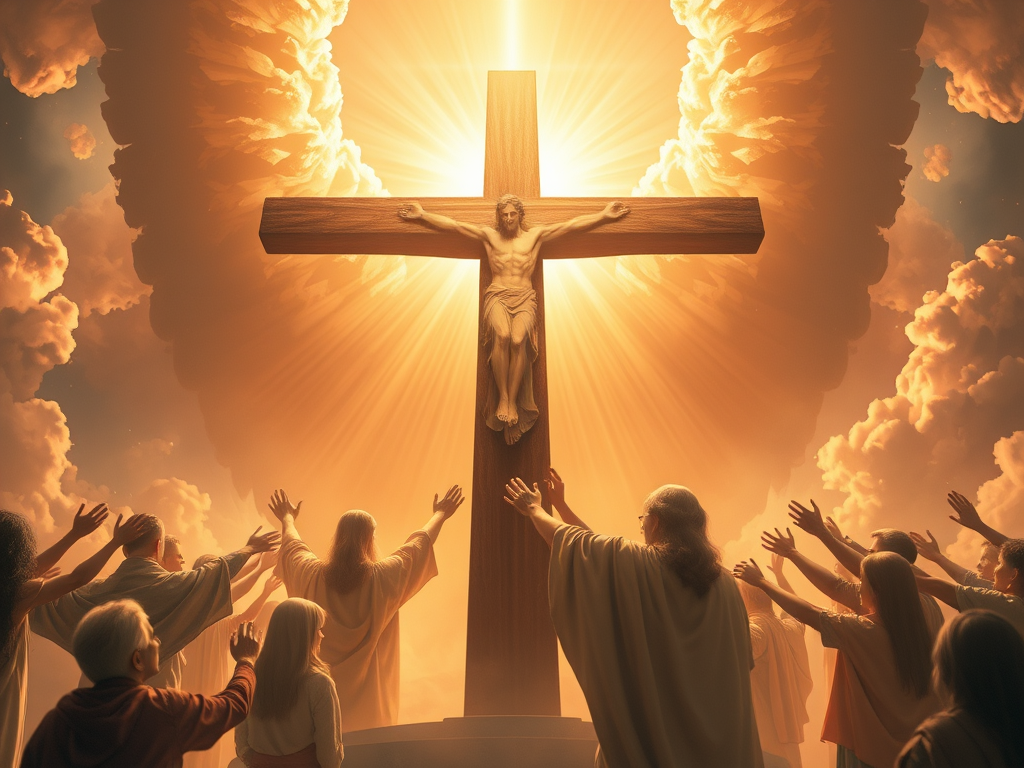
On the cross, Jesus took the penalty of sin — the very barrier that kept us out. His sacrifice satisfied justice and poured out mercy in the same moment. And when He said, “It is finished,” the wall between heaven and us came down.
“For if, while we were God’s enemies, we were reconciled to him through the death of his Son, how much more, having been reconciled, shall we be saved through his life!” — Romans 5:10 (NIV)
Read that word again: enemies. Not distant acquaintances — enemies. And He reconciled us anyway. The moment you trust Jesus, turn from sin, and receive His forgiveness, the distance collapses. You’re no longer an outsider. You’re a son, a daughter, brought home.
Now Carry It to Others
But reconciliation was never only vertical — between God and you. It’s also horizontal — between you and the people around you. Once you’ve received peace from God, you’re sent to hand it out.
“For he himself is our peace, who has made the two groups one and has destroyed the barrier, the dividing wall of hostility.” — Ephesians 2:14 (NIV)
This is where it gets personal. Bitterness, grudges, cold shoulders, the walls we quietly build — they’re the opposite of what God did for us. To live reconciled is to become a minister of reconciliation: to forgive the one who hurt you, to make the first move toward peace, to love when it’s hard. It doesn’t pretend the pain wasn’t real. It lets mercy transform it.
Because here’s the truth the cross settles forever: no distance is too far for God’s love to cross, and no relationship is too broken for Him to begin restoring — starting with yours.
Reflection
Sit honestly with these for a few minutes:
- Picture the relationship in your life marked by distance or silence right now — someone you’ve quietly written off, or who’s written off you. What’s the one step toward peace you keep avoiding? Where might God be asking you to move first?
- Do you still feel far from God — as if the closeness is gone or was never really there? What would change today if you truly believed the wall is already down, and you’re not His enemy but His child?
- Reconciliation cost God His Son. Who is He asking you to extend that same undeserved grace to — even though the hurt was real, and even if they never say sorry?
“Father, thank You that You didn’t wait for me to fix the distance — You crossed it Yourself. I receive Your peace. Now give me the courage to carry it: to forgive, to make the first move, and to love the way You first loved me.”
Comments